Dell Latitude 5490 vs Dell Latitude 5491: Which Business Laptop Should You Choose?
In the world of business laptops, the Dell Latitude 5000 series has always stood out for its reliability, durability, and balance between performance and mobility. The Dell Latitude 5490 and Dell Latitude 5491 models, released in 2018, are bright representatives of the 8th generation of Intel processors (Kaby Lake R and Coffee Lake). These laptops are designed for professionals who need stable work in the office, on business trips, or at home. They withstand intensive use, meet the military standard MIL-STD-810G, and offer a good set of features at an affordable price, especially on the secondary market.
In this extensive and comprehensive article, we will compare the Dell Latitude 5490 and Dell Latitude 5491 in detail on key aspects: design, performance, battery life, display, ports, keyboard, audio, webcam, upgrade options, and overall suitability for various scenarios. We will rely on technical specifications, user reviews, and tests to help you choose the model that best suits your needs. If you are looking for a used option, pay attention to the LuckyPC.com.ua website, where these models are available with a warranty and trade-in.
History and positioning of models
The Dell Latitude 5490 and 5491 belong to the same line, but with different emphases. The Latitude 5490 focuses on a balance between performance and energy efficiency, making it ideal for everyday office work, travel and long battery life. It is equipped with U-series processors that consume little power (15 W TDP), which allows the laptop to work longer on battery power.
In contrast, the Latitude 5491 is a more powerful version with H-series processors (35-45 W TDP), which provide higher performance for demanding tasks such as photo/video editing, multitasking or even light gaming. This model is often equipped with NVIDIA GeForce MX130 discrete graphics, which makes it closer to workstations. Both models were released at a time when Dell was focused on the transition to 8th generation Intel, adding features such as Windows Hello (facial recognition) and improved security.
On the secondary market, these laptops are popular for their durability: the aluminum-magnesium chassis can withstand drops, dust, and moisture, and the business orientation means they were designed for corporate use with an emphasis on long service life.
Design and construction
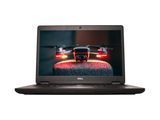
Both laptops have a similar design: a compact 14-inch form factor with thin bezels around the screen, which makes them convenient for mobility. The Latitude 5490 weighs about 1.6 kg, and the Latitude 5491 is slightly heavier, up to 1.7 kg, due to more powerful components. The case of both models is made of magnesium alloy with a soft-touch coating, which is pleasant to the touch and resistant to scratches.
The difference in design is minimal: the 5491 may have a slightly thicker case (about 20.9 mm versus 20.3 mm in the 5490) for better cooling, since H-processors generate more heat. Both have passed MIL-STD-810G durability tests, withstanding temperatures from -29°C to 63°C, vibration, and drops from heights of up to 1.2 m. In practice, users note that the 5490 is more "quiet" in everyday use, while the 5491 can turn on the fans more actively under load. For business users, both models offer an optional fingerprint scanner and an infrared camera for biometric authorization, which increases data security.
Display
The screens in both models are identical in basic characteristics: 14-inch Full HD IPS (1920x1080) with a matte coating that reduces glare. Brightness reaches 220-300 nits, depending on the configuration, with good color reproduction (about 60-70% sRGB). Viewing angles are wide, which is convenient for presentations or collaboration.
There is practically no difference, but in some configurations the 5491 can have an option with higher brightness or a touch screen if you choose the top versions. For everyday work, both displays are comfortable: text is clear, colors are natural, and the matte coating makes them suitable for outdoor work. If you work with graphics, both models are not ideal (100% sRGB is missing), but for office tasks - more than enough.
Performance: Processor, Graphics, and Memory
Here's where the big difference lies. The Dell Latitude 5490 is powered by 8th Gen Intel Core U-series processors, such as the i5-8250U or i7-8650U. These chips have 4 cores/8 threads, a base frequency of 1.6-1.9 GHz with Turbo Boost up to 4.0-4.2 GHz. They are power-efficient (15 W TDP), which makes the 5490 fast for everyday tasks: browsing, Office, Zoom, BAS/1C, programming in VS Code. The integrated Intel UHD Graphics 620 is good for light photo editing in Photoshop or watching 4K video, but not for gaming or heavy editing.
The Dell Latitude 5491, on the other hand, uses more powerful H-processors, such as the i5-8300H or i7-8850H (4-6 cores, up to 4.1-4.6 GHz Turbo). The TDP of 35-45 W allows you to achieve 20-50% higher performance in multitasking, video editing in Premiere or working with large databases. In addition, the 5491 is often equipped with discrete NVIDIA GeForce MX130 graphics (2 GB GDDR5), which adds power for graphics tasks, light games (for example, League of Legends at medium settings) or even CUDA acceleration in programs like AutoCAD. Both support up to 32 GB DDR4 RAM (2 slots) and up to 1 TB SSD (M.2 NVMe), but in basic configurations the 5490 more often has 8-16 GB, and the 5491 - 16-32 GB for demanding users. In the Cinebench R15 tests, the 5491 scores about 700-800 points (multi-core), compared to 500-600 for the 5490. For gamers or designers, the 5491 is better, but for office work, the 5490 is more than enough.
Battery life and cooling
Due to the difference in processors, battery life varies. The Latitude 5490 with a 68 Wh battery lasts 6-8 hours in mixed mode (web, documents), and up to 10 hours in video viewing mode. The low power consumption of the U-processors makes it ideal for traveling.
The Latitude 5491, with more powerful components, lasts 4-6 hours under load, and up to 7 hours in light tasks. Discrete graphics further reduce the operating time. Cooling in the 5491 is more efficient with larger fans, but noisier under load. The 5490 has a quieter cooling system, but can heat up during prolonged operation.
Ports and connectivity
Both models have a similar set of ports: 3x USB 3.1, USB-C (with DisplayPort), HDMI, VGA (for older projectors), RJ-45 Ethernet, SD card reader and audio jack. The difference: in the 5491 with discrete graphics, USB-C can support Thunderbolt 3 (optional), which allows you to connect external 4K monitors or docking stations. Wi-Fi in both — Intel AC 8265 (802.11ac, up to 867 Mbps), Bluetooth 4.2. For modern networks, both are compatible with WiFi 5, but not 6/7.
Keyboard, touchpad, and peripherals
The keyboards are identical: backlit island-style, with soft key travel (1.5mm), and spill-resistant. The touchpads are accurate, with support for Windows Precision gestures. The 720p webcam with IR for Windows Hello is business-class standard, but not for professional video. Audio: Stereo speakers with Waves MaxxAudio provide clear sound for conferences, but the bass is weak.
Upgradeability and Serviceability
Both laptops are easily upgradeable: access to RAM, SSD and battery is through the bottom cover (a few screws). You can add up to 32 GB of RAM or replace the SSD with a larger one. Dell offers diagnostic tools, and on the secondary market, they are often sold with an already upgraded configuration.
Price and availability on the secondary market
As a used one, the 5490 costs 8-15 thousand UAH (depending on the configuration), the 5491 - 10-18 thousand UAH due to the power. On LuckyPC.com.ua both are available with a 6-month warranty, trade-in and delivery. The 5490 is better for budget purchases, the 5491 - for those who need more power.
Conclusion: Which one to choose?
Dell Latitude 5490 — the choice for mobile users: energy-efficient, autonomous, powerful enough for office work. Dell Latitude 5491 — for demanding: higher performance, graphics for creativity, but with a compromise in autonomy. If you are on LuckyPC, choose according to the tasks: 5490 for daily use, 5491 for intensive. Both — a solid investment in a business laptop!